Field Study and Service-Learning MediaBlog
Showing posts with label *Indiv/Grp Projects. Show all posts

06 April, 2014

La Mariposa: A Synergism of Business & Development (TSP Case Study)

As a traveler in Central America, you have choices. You can buy an all inclusive package, ("todo incluido" as my host mom would say), keep both feet firmly planted between the grounds of your cushy resort and pathway to the beach, and return home with a sunburn, hangover, and an extra ten pounds around your midsection. Or you can venture outside your comfort zone, immerse yourself in a new culture, meet locals, and return home with a refreshing new perspective and the consolation that you have, (in some way), made a positive impact on the land you visited. As enticing as the former option may have sounded two months ago, I can now honestly say that I would much rather do the latter: be a shaper, instead of a mere observer. This is the true definition of ecotourism, a word that is so overused, its true meaning has become ambiguous. Ecotourism is not a stationary act; its implementation is set within an interdependent world of diversity and differences and their respective social and cultural systems. In Nicaragua, my peers and I were fortunate enough to experience and observe a functioning ecotourism establishment and meet the owner of the project.

Nestled within the tropical lush tropical hills just south of Nicaragua’s capital, Managua, is the small village La Concha, site of the “La Mariposa” sites, both hotel and study center. La Mariposa is an idyllic conglomeration of rustic cabinas and colorful hammocks while the study center is a larger, less structured site that accommodates groups; both are the brainchildren of British native, Paulette Goudges. Upon our arrival, Paulette graciously invited us to her office for a pre-lunch presentation. Vivacious and insightful, Paulette discussed her rather novel approach to sustainable development in rural community, a compelling talk only further garnished by her frequent quips of witty British humor.
 
Though Paulette is now an appreciated and in many ways, esteemed, member of the community, she has come a long way. Paulette first came to Nicaragua in the 1980’s during the Contra Wars to volunteer in an orphanage. Upon her arrival and witnessing how destitute the rural Nicaraguans were living, her proposed short trip turned into a three year stay. Realizing how important language acquisition was to her immersion in Nicaraguan culture, Paulette learned Spanish and adopted a two year-old orphan who she brought back with her to the United Kingdom upon her departure from Nicaragua. However, reintegrating herself back into Western culture was not easy. The time that Paulette had spent in Nicaragua left a lasting impression on her, would later send her on a meandering path that would cross continents and oceans. The years that she had spent in Nicaragua had left her enamored with a culture and people that were more resourceful, persevering and genuine than those she knew in her homeland.

After making several return trips to Nicaragua, Paulette finally decided to make an investment in her future and those of local Nicaraguans. Paulette cashed in her pension and sold her home in the UK and used those funds to finance the development of La Mariposa. This is not a place for tourists seeking the thrill of nightclubs, bars, and bright lights, but for tourists looking to gain a greater understanding of a different way of life; in this sense the hotel welcomes visitors of all-ages and backgrounds who want a true cultural and social immersion experience instead of a superficial packaged tour, with average stay ranging anywhere from one week to a couple of months. Paulette believes in complete transparency and giving the guests an authentic depiction and understanding of Nicaragua, through an impartial crash-course approach to Nicaraguan culture, politics, and history, even when it may not be favorable. Many people that come to a country with such a convoluted history such as Nicaragua have misconceptions, and are quick to write the country off as being "impoverished," or "politically unstable." However, it is important to understand that each country has its own complex social structure and unique history and seeing the hardships, attitudes, and customs firsthand, ("the good, the bad, and the ugly") can inspire the guests to make a difference. Guests have the option of staying with a local Nicaraguan family instead of at the hotel. Regardless of where the guests are staying, the one standard among all guests is that they must take Spanish classes during the day, and despite nationality, age and occupational differences, during mealtimes, guests are eager to utilize their newly learned Spanish making for a socially vibrant atmosphere among workers and guests. For recreation, guests have a wide variety of option: hammock weaving, the construction of traditional handicrafts, guided walks, cooking lessons, horseback rides, hikes, solar-power lessons.

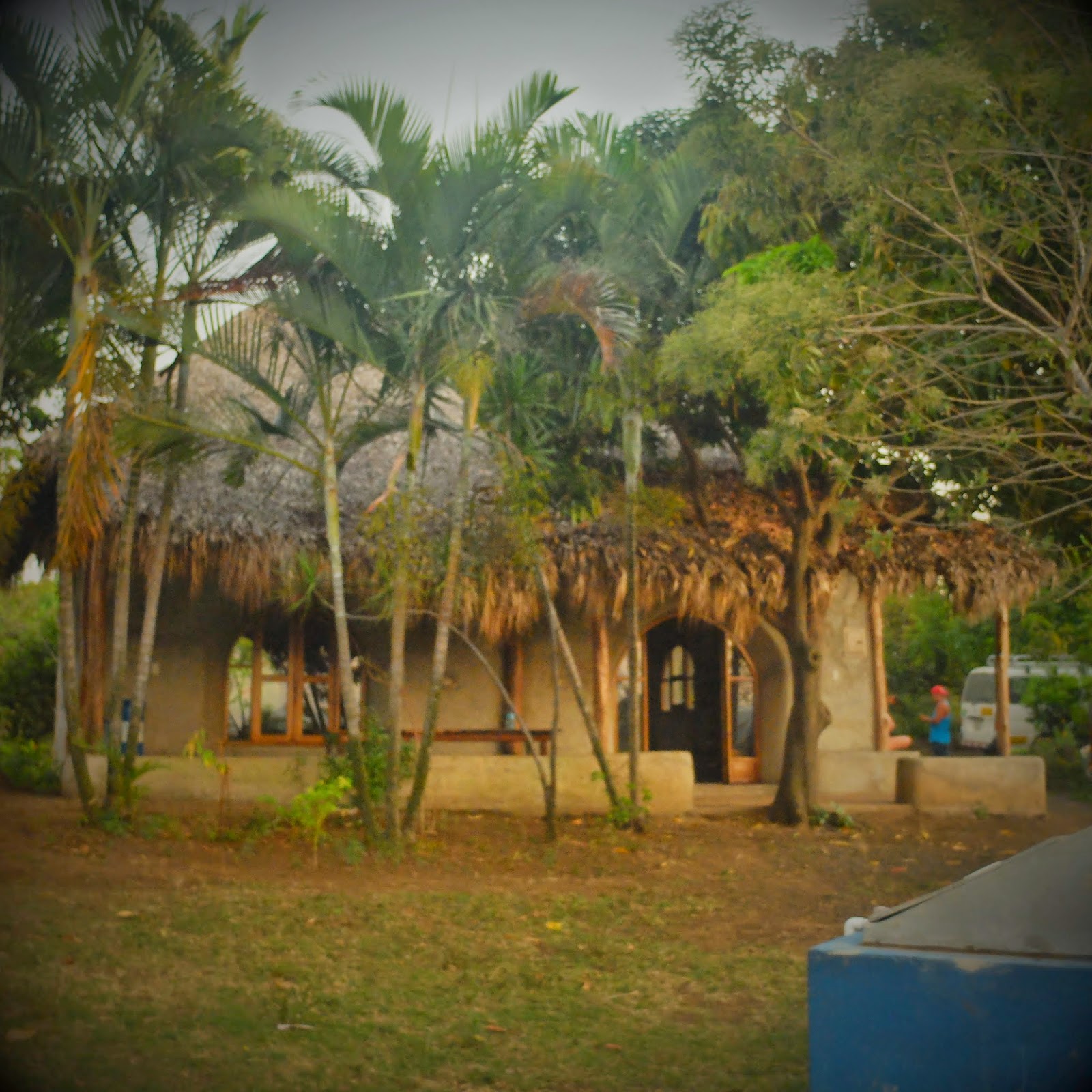
Both candid and personable, Paulette firmly believes that in order to positively influence those around you, you must lead by example. As she says, “You cannot just tell other people to act in eco-friendly ways. You must set an example.” Both the hotel and the study center strive to be carbon-neutral. The study center is made entirely from thatch, volcanic rock, and used tires. Hot water is derived from solar panels, and a large percentage of the fruits and vegetables served are grown and picked from the on-site organic garden. Gray water, derived from showers, is stored and used to water the plants. There is a wormery and compost on-site used to enrich the soil. In addition, the habitation of rescue animals on site allows guests have the pleasure of getting a glimpse into some of the amazing wildlife that Nicaragua has to offer, including: monkeys, a toucan, rabbits, and reptiles.

From my interactions with those in the Managua area, I quickly learned that La Mariposa is a famous
attraction in the area. On site at La Mariposa, eating lunch outside with a friendly mix of people trying to communicate in Spanish, swinging in a hammock, it is easy to forget you are at a hotel. However, since the establishment of La Mariposa, Paulette's aim has been to aid the community in transcending its poverty. Without a doubt, Paulette has succeeded. The hotel, which currently employs over sixty-five people, is the biggest non-public employer in the area and Paulette prides herself on the fact that employees of La Mariposa make more than local wage levels. Paulette believes that in creating sustainable community in rural community it is important to create dignified employment instead of donating money to the local government, where those funds, (if given to the community at all), would be done so in the form of handouts. Local employment is only one of the ways that Paulette promotes sustainable ecotourism development. What impressed me most about La Mariposa, was Paulette’s ability to integrate social and community projects within her larger business framework. Paulette keeps none of the profits from the hotel to herself. Proceeds derived from guests are fed directly back into the community, through employing local people, funding existing local community service projects establishing new programs. The frequency to which Paulette is able to help directly relies on the success of the hotel. In this sense, hotel management and hospitality is the foundation of all else. The busier the hotel is, the more money Paulette will have to give current workers more hours, employ more workers, and to fund current and future projects.

Paulette believes that the biggest reason that most foreign aid projects fail is that they are derived from a Western blueprint. So many times, Central America's Northern neighbors think they know what the local people want and need, disregard their input and undervalue their knowledge. Paulette believes that it is important to not trivialize the knowledge of the local people and marginalize their needs and wants She said that in her experience funding community projects, those that lasted were the ones that people have asked for. Paulette believes that it is important to communicate with those in the areas that you are trying to help and really listen. Listen to the needs and concerns.
People from the community feel comfortable approaching the establishment and asking for funding. During lunch, we ate delicious glazed donuts that were the courtesy of local women who received money from La Mariposa some time ago to establish a building where they could put their cooking equipment and bake.
During my stay, I got to see and partake in one of their community projects. I visited Ruben Dario Primary School, which serves more than two hundred students from La Concha's barrios. La Mariposa and its guests have contributed funds to complete the construction of the library and have filled the shelves with books and the open space with chairs and tables. I was able to look at the Rincon de Leer (Reading Corner), where I was pleasantly surprised to see how well the children were able to read.

Shortly after the establishment of the eco-hotel, Paulette decided to build an eco-study center within close proximity to the hotel that would serve as a place where larger groups could stay and experience the culture and nature of the locale without disrupting the more established schedule of the eco-hotel. This is where my peers and I stayed.

The establishment of the La Mariposa hotel and study center have been an incredible blessing to the La Concha people. Paulette hopes that in her older years she will be able to see Nicaraguan people completely running La Mariposa. The passing over of her creation to the Nicaraguan people would be a gift of dual satisfaction. Paulette would be giving something back to the Nicaraguan people that have accepted her, embraced her vision, and given so much joy to her life; in the same token, having Nicaraguan people run a successful establishment would set a precedent for the future Nicaraguan entrepreneurship.

The time that I spent at La Mariposa was one of the most impactful during my participation in the program. My first few weeks in Costa Rica, hearing English was music to my ears and I would get practically giddy knowing that there were fellow Americans in my midst. However, towards the end of the program, I stopped trying to seek out fellow Americans. After all, if I wanted to only interact with English-speakers I may as well have stayed in the States. If I really wanted to make the most of my experience, I needed to put myself out of the boundaries of my contentment. Hearing Paulette's story and talking to her some of her interns, (who origins stem from around the world), showed me the importance of taking healthy risks, risks that allow you to grow, and gain experience as well as the perspective that comes with it. Instead of traveling to "help," it is more impactful to travel to "learn." Seeing the magnitude of need in Nicaragua made me realize that individual choices and hands are not enough to solve these economic, environmental, and social problems, and that the catalyst for real change is tied within a much larger political framework. We are only small part of a much larger system.  And while the Earth may be incredibly vast, we are forever tied to every piece of land we have ever walked upon. Gaining a better understanding of how different people live and why they are in the situations broaden one's perspective and inspire one to support different projects and social causes. Finally, I realized the importance that human connection plays within the larger discourse of sustainability. While we may travel due to curiosity, or a desire to see and experience new things, it is the few moments that we share with people (whether a transient smile, brief conversation, or deeper relationship) that capture our hearts, change our perspectives, and makes us want to stay. The few days that I spent in Nicaragua, living with less and giving back more, were some of the most meaningful moments of my life and those memories will be forever embedded within my heart and mind.

AUTHOR: Heather Haj

Culturally Appropriate Ecotourism in Costa Rica (TSP Paper)

Ecotourism: Responsible travel spurred out of curiosity; fosters environmental and
cultural understanding while maintaining and striving to enhance the integrity of the
biological, sociocultural elements of the locale.
- Heather Haj, 2014


A Matter of Purpose and Place: Culturally Appropriating Ecotourism
Central America has endured arduous centuries of warding off their Northern neighbors. In 1856, William Walker and his filibusters embarked on an imperialistic attempt to enslave Central America. Not long after, banana plantations owned by the United States, (most notably the United Fruit Company), established roots in Central America, ushering in the banana republic phenomenon that dictated Costa Rican policies, culture and economic practices. However, today Costa Rica is viewed as the jewel, or “Switzerland of Central America.” Everyday, thousands of foreigners eager to snorkel the waters, surf the beaches and get a glimpse of Costa Rican wildlife, are shuttled into and out of the country via the Juan SantaMaria airport in San Jose. Many are oblivious to the statue of Juan Santamaria that is erected in front; it is ironic that the man that was widely known for ousting foreign invaders less than two centuries ago, now welcomes hundreds of thousands of foreign tourists yearly. Tourism has been embraced by Costa Rica, a country that has worked diligently to promote this segment of its economy. While the government has positively responded by enhancing preservation efforts within national parks systems and improving infrastructure, increasing tourism has led to many obscure changes within the country. While it may seem innocuous to many, tourism has affected the social and cultural thread of the nation. Recently, tourism has replaced bananas as the country’s most significant source of income; leaving the country with little choice but to cater to tourists and their demands.
Mass, Nature, and Ecotourism: Competing Paradigms
It is first best to be able to examine the differences between different types of tourism. Mass tourism is the most common form of tourism. A typical European or island vacation would fall under mass tourism. Sightseeing, being caravanned around in a van, all-inclusive resorts, hotels, and tour guides are all typical of mass tourism. Mass tourism, while increasing government revenue, has few redeeming qualities for the destination region, their people, and the natural resource base. If a traveler books a reservation with a U.S. travel agent, flies on a U.S. carrier, stays in a foreign owned hotel, eats in nonlocal establishments, the bulk of these dollars do not circulate locally, and thus do not promote local development.
Ecotourism is inspired by the natural history of the area, including indigenous cultures, and possesses the following characteristics: traveling to a natural destination, minimizing impact, building environmental awareness, providing direct financial benefits for conservation, providing financial benefits and empowerment for local people, respecting local culture, and supporting human rights and democratic movements. Ecotourism incorporates appreciation for nature, participation in field projects or activities, and sensitivity to culture. Contribution is paramount to ecotourism. Contribution of the ecotourist involves physical labor or providing financial means aimed at benefitting the conservation of the field site or region. This was exemplified during our visit to La Mariposa, an eco-hotel that we visited which strongly encourages guests to work on one of their community projects during their stay.
Nature tourism should also not be confused with ecotourism, as the scope of nature tourism is too broad and does not specifically address the objectives of the ecotourist. Nature tourism is composed of travelers who simply travel for the purpose of enjoying undeveloped natural areas and wildlife. An ecotourist is not merely an observer, but a shaper. The experience of the ecotourist is shaped by the impact they have on the community. At the rudimentary level, an ecotourist travels for the intrinsic nature of experience, not business or hedonistic pleasure. Ecotourism directly contributes to the maintenance of species and habitats by providing revenue to the local community. This revenue is sufficient enough for local people to value and protect their wildlife heritage, even if only as a source of income. Ecotourists are more willing to endure hardships to secure experiences, whether it be the “do-it-yourself” ecotourist who is willing to stay in a variety of accommodations, fairly mobile, and remains a relative amount of anonymity during their stay or the research-driven ecotourist who is staying in the same region for an extensive period of time.
The Scope of Tourism in Costa Rica
In any locale, tourism can best be analyzed by dissecting the opportunities and constraints present within spatial boundaries. Opportunities include rich, diverse natural environments (coastlines, mountains, rainforests), stable governments that support tourism development, and cultural amenities that appeal to a broad range of tourists. The absence of one or more of these factors can pose constraints for successful tourism; diversification of tourist activities result in regional and spatial differentiation of tourism. For this reason, Tamarindo, a popular beach town, attracts far more tourists than a rural town on the outskirts of the country.
Costa Rica has well publicized idyllic landscapes. In addition, the country is known for being rife with beaches instead of violence. Safety, image and political conditions are an overriding factor when tourists are seeking a vacation destination. Safety significantly correlates with per capita gross domestic product and economic stability. In contrast, Costa Rica has a penchant for pacifism; the country has had one hundred years of democracy and fifty years without an organized military have helped to foster a stable political and social climate that is appealing to tourists. With 230 separate protected areas and an extensive national park system created in 1969, Costa Rica is well positioned to continue building its ecotourism industry.

The Tourist Gaze: Tourism and Cultural Change in Costa Rica
Tourism is a unique and central element in contemporary Costa Rican society, and when examining tourism, it is important to not just focus on tourists alone but to attend to the larger context, the intersection of tourists and locals, and the spaces these two groups overlap. There is no doubt that the promotion of tourism in Costa Rica has led to several desirable outcomes. Most notably, the expansion of ecotourism has created ample opportunities for income generation and employment. In addition, tourism supplies incentives to protect the local environment and cultures, provided these incentives are strong enough to ward off the urge to exploit these resources for short-term gains. Due to this, natural resource conservation of both state-protected areas and private lands are on the rise. However, it is crucial to understand how tourism not only induces cultural change, but also cultural maintenance and cultural consumption. John Urry, a British sociologist and professor at Lancaster University examines the concept of tourism from a sociological perspective and conducted empirical research on the convoluted relationship between the tourist and the “toured,” which Urry calls, “The Tourist Gaze.” It is important to remember that, prior to their arrival, tourists have been informed by the media and other influences on what to expect in their destination. In Costa Rica for example, this may be drinking agua de pipa, as you are blanketed with palm trees above you, and staring into crystal blue waters. This “tourist gaze” sets expectations for what the tourist wants to see, and locals will play up to these preconceived notions. In many cases we focus on the influence that the tourist may have on the rather “hapless” citizens. However, while the tourist gaze and subsequent behavioral practices affect local culture, it is important to remember that “toured” people do not stand by passively. Just as toured people are affected by tourism, they also influence it, try to shape it to their benefit and influence the way that tourists behave. It is economically beneficial to accommodate to tourists, and locals will try to “play up” to these preconceived notions. Over time, the performance of what tourists expect becomes regular to the locals, who have adjusted to living in a tourist milieu. This is notable in the beach towns in Costa Rica. Whether you are on the Pacific side or the Atlantic side, they all seem to have adopted the stereotypical “surf shack” look.

Future Objectives
We cannot attend to matters economic or cultural in Costa Rica without seeing how they are linked to issues in the United States and elsewhere. This holds true for tourism; ecotourism is not stationary, but set within an interdependent world of diversity and differences which vary between time and space; any type of tourism impacts the environment, society, and cultural systems. It is important that when discussing ecotourism, we are doing so holistically, within the larger discourse, encompassing issues such as: environmental and habitat protection and sustainable development. Additionally, tourism has historically been viewed as an “isolated alternative,” to other economic sectors, while the focus of tourism typically primarily remains on the service itself and the customers. When evaluating tourism, such as ecotourism, it is imperative that we do not dissociate it from other economic activities; it should instead be seen as a complementary activity. It is also worth addressing the inherent paradox of ecotourism: at what point is it too much? In the case of Costa Rica, how can we ensure that the continued success of ecotourism does not result in irreparable environmental and socio-cultural damage over time? These are both questions that I have deeply pondered during my time in the program.

Author: Heather Haj

04 April, 2014

Ecotourism in Costa Rica and Nicaragua (TSP Paper)

            Ecotourism in Costa Rica is one of the key activities of the tourism industry in the country. By the early 1990s, Costa Rica became well known because of its start of developing ecotourism. The country is among many developing nations that look to ecotourism as a way of cashing in on the growing demand for this popular trend of travel. Ecotourism draws many tourists to visit the extensive national parks and protected areas around the country. Costa Rica was one of the first in this type of tourism, and the country is recognized as one of the few with true ecotourism.  Costa Rica has been able to gain immense popularity for its development of a successful yet environmental friendly, ecotourism industry.
            Costa Rica contains a rich biodiversity and immense ecosystem. Ecotourism in Costa Rica leads the ranks in this category. With all the advantages Costa Rica has been receiving because of ecotourism, they are bringing in more and more income. The protected areas that tourists tend to go to the most bring profit not only to the workers there, but also to the community as a whole. At first, tourism was at a slow pace for a while because of the many conflicts and civil wars in different locations all over the country. Once the civil wars and conflicts dwindled, tourism in Costa Rica became more prevalent and has only increased since then.
            Costa Rica’s location is very important when it comes to ecotourism. Some of the nation’s success in ecotourism can come from the United States because of how close they are. Many travelers come directly from the States and bring tourism down. It is not too far from the States so many of the beach towns are populated by foreigners. “American travelers make up 20% of the total world’s tourism market”. Since Costa Rica is so close to the United States, it has been a great spot for North Americans to visit. The climate of Costa Rica is one of the many reasons why “49% of foreign visitors come from the United States and another 9% of visitors come from Canada and Mexico”. This just proves that because of Costa Rica’s location, tourism is very dominant and will always happen for many more years to come.
            Ecotourism brings a great amount of money yearly to the country. This allows Costa Rica to be ranked high on the standards of living list. Costa Rica contains high growth rates, economic stability, and low crime rates. In the past decade or so, ecotourism in Costa Rica has increased drastically. This allows a huge expansion in the job market, allowing many local people to find jobs. When locals find jobs it generates income and employment. The topic of jobs and expanding the job market goes great with what was witnessed in Nicaragua during our time there.
            Although Nicaragua is the second poorest country behind Haiti, it is starting to strive in the ecotourism field. Many spots of Nicaragua haven’t been touched or used by ecotourism, but the spots that have, are very well known and important in maintaining a sustainable environment. Ecotourism in Nicaragua continues to grow as tourists become more comfortable with visiting the country. It will also improve along with the country's tourist infrastructure. A good thing is that Nicaragua's natural areas remain fairly untouched and are thus ideal for ecotourism in Nicaragua. New species are still being discovered in pristine areas which gives many tourists an opportunity to spot them when on eco-tours. 
            An eco-tour in Nicaragua is well worth it. Not only will people be able to experience nature firsthand, but they will also come across some very unusual animal species. As tourist volume tends to be low and you are unlikely to meet up with other tourist groups as you make your journey through the country. This often helps to make your stay here just that much more special and intimate.
            It was very rough to see how the second poorest country lives. To know that these people do not have enough money to provide for their families on a weekly basis made me sad and realize how fortunate I am to have what I have back home. On a good note, the local expansion of eco tourism and the job market expanding both here in Costa Rica and in Nicaragua when I went was great to see. Local people near the Mariposa Study Center in La Concepcion, Nicaragua are offered several jobs to help out with ecotourism.


In both the Mariposa sights, teachers and cooks were in need. In the Mariposa Study Center it is very important to have Spanish speakers willing to teach foreigners Spanish weekly. Another job that was needed there because of the amount of tourists there was cooks. All the cooks there were very friendly and kind. They all had smiles on their faces and looked like they enjoyed what they were doing. Cooks, teachers, and many other jobs are opening up and needed in Nicaragua. They play an important role to help out with ecotourism. This is how the topic of ecotourism and job expansion links great with our trip to Nicaragua. 
The Mariposa Study Center offers a great getaway for travelers. It provides beautiful housing, kitchen, bathrooms, showers, and beautiful greenery all around. The housing in the Mariposa Study Center are beautiful cabins. The base of them is made up of many volcanic rocks all piled together to have great support for the bottom of the cabin. On the sides they have bamboo poles sticking straight up creating the sides of the cabin. The poles go on all four sides of the cabin making a strong supportive system for the side. On the roof it contains sheet metal and laid on top are tree frawns that cover the whole roof. The whole building is made up of objects that come directly from Nicaragua. It is very resourceful and they use less material in order to build the cabins.  
        The Study Center also requires tourists that want to come by and stay there to take Spanish classes and volunteer work. The Spanish classes are all one on ones with the teacher and provide an excellent learning environment for the student. There are different levels of Spanish the tourist can take depending on his/her knowledge of Spanish upon arrival. The volunteer work at Mariposa consists of many different things. The tourists can either choose between taking classes, doing volunteer work, or both, during their stay there. They have to choose something because they cannot just stay there without doing anything. There are several elementary schools and places where the volunteers go to help out. It offers them a great real life experience there in Nicaragua.

                                                                                                                    Author: Jordan Kalebaugh

03 April, 2014

Overview of Hydro-Electricity in Costa Rica (TSP Paper)

      Humans have been utilizing hydraulic power from rivers and streams for centuries. The Greeks and Romans began using waterwheels to grind corn in the third century B.C.E. and the Chinese had their own independent inventions by 100 B.C.E., these designs were very basic yet practical. Hydropower is a clean source of energy in that nothing needs to be burned to harness it. The hydro cycle replenishes itself, hence the reason why humans have been taking advantage of it for hundreds of years. Costa Rica is one of many countries that have a heavy dependence on hydropower, generating over eighty percent of the country’s electricity.
     
      Hydro technology has been drastically improved in the past few centuries. It wasn’t until the 1770’s that French engineer Bernard Forest de Bélidor, published research on the water turbine that would act as the foundation of modern hydro turbine development. The French were extremely proactive in engineering turbines for hydroelectric use. The San Lorenzo macro hydro-plant the class visited used two turbines designed by a French engineer. The Francis turbines at this site are capable of producing 8.5 mega watts each. Macro scale hydro projects in Costa Rica such as this one are relatively new. Large generation of electricity based on hydropower in the country did not begin until 1949, when the Costa Rican Electricity Institute (ICE) was founded to manage electricity and telecommunications in the country.

      While hydroelectricity is much cleaner than burning coal, natural gas and oil for electricity, there are still some environmental impacts that are tied into its generation. One of the most apparent impacts is had on the aquatic life that thrives in rivers and streams near hydroelectric sites. In the majority of macro designs, a reservoir is constructed in order to store water for its plant. These reservoirs affect wildlife and the natural environments they are transplanted into. The dams built to hold the water stop fish from being able to navigate water systems normally. As migrations of some species are brought to a halt, some populations severely suffer. Populations down stream also suffer from loss of water as the hydro-plants alter the natural flow of the river. As some species decline in population other species that thrive in warmer slower waters can see population spikes near reservoirs. All of these factors contribute to the disruption of aquatic ecosystems.

San Lorenzo Dam
      Another sizable problem that goes along with hydroelectricity is sedimentation, this is probably the most technical problem dams face today.  Sedimentation builds up in reservoirs and takes away from the amount of storage available for water. Maintenance is constantly required at large scale dams to try to prevent this problem from happening. At San Lorenzo, the staff does an annual cleaning of its reservoir to remove sediment and increase energy production. The sediment is placed outside of the river in a sort of heap. If this sediment was utilized for purposes such as agriculture it could be highly beneficial.

      There are also doors found at the bottom of the large reservoir that are opened when the amount of sediment is clearly increasing in an effort to combat the problem. When sediment gets trapped by the dam it creates a functional problem for the hydro-plant but it also creates a problem for the river and the species that inhabit it. As the sediment stops at the dam it prevents nutrients from traveling downstream and therefore can cause nutrient deficiencies at some parts of the river. The reverse affects of this problem as that there are too many nutrients near the reservoir where the nutrients collect. The unnatural construction of hydro dams creates very unnatural problems.

      Currently hydroelectricity is being used in 150 countries.  In total, 16% of the electricity in circulation around the globe is harnessed from water(which equals 3,427 terra-watt hours).  Here in Costa Rica, 82% of the total electricity in the grid comes from water.  The country produces more than 90% of it’s total energy from renewable sources.  Costa Rica is only going to move further with hydro electricity.  Currently the largest facility in the country is the Presa Sangregado dam.  The dam is on the south east shore of Lake Arenal and produces 157 megawatts hours of energy which is all sold and regulated by the ICE (Instituto Costarricense de Electridad).

       Costa Rica has great potential for hydro-electricity.  The country has plenty of rainfall throughout the year and a landscape perfect for building dams and reservoirs.  The perfection of the land is due to the steep mountains formed on the Central American isthmus and bounty of rivers with consistent waterflows and deep valleys.  As a whole Costa Rica has a predicted hydro-electric energy potential of 25,400 MW.  Considering the size of the country, this number is very high.  Costa Rica has a total of four hydro-electric plants that are of a notable size: Presa Sagregado(largest),  Cachí (three 34 MW turbines), Angostura( three 70 MW turbines), and Corobici (additional component to the Arenal Reservoir). Although these are all very large hydro projects they do not produce even close to all the hydro-electricity in Costa Rica. Many of the Hydro-electric producing facilities in Costa Rica are small or Medium scale facilities due to the medium scale needs of the country.  One example of a medium scale Hydro Electric plant in Costa Rica is the San Lorenzo dam.  The dam is not built on a large river and does not alter the flow as drastically as many other hydro-electric facilities do.  The plant produces 17 megawatts of energy and is a great display of a Costa Rican hydro-electric plant.

       The last type of Hydro Facility found in Costa Rica is a Micro Hydro facility.  These facilities are the most environmentally friendly out of all other facilities because of their run of the river design.  They produce anywhere from 5kw to 100kw of energy.  An even smaller design is Pico Hydro, which is a facility that produces under 5kW of energy.  The two of these designs have the purpose of powering small communities.  Pico and Micro Hydro facilities are not government owned and are not built with the intention of selling the energy.  Typically these types of facilities are used as a power source in remote settings that are not connected to the power grid.  They can have the purpose of powering anything from a light bulb to a community with as many as 50 homes. Micro hydro-electric facilities are very simple and should be used more across the world.  The design only needs a flow of 2 gallons per minute, or a drop as low as two feet for a viable power source.  The design is perfect for many areas of Costa Rica and should be an implemented strategy in rural and indigenous areas.

       Harnessing the power of water has been a practice for much of written human history.  Even harnessing the mechanical power of water is nonetheless using the energy of water.  Nowadays water is one of the main electrical sources of the world.  Due to the growth of the hydro-electric industry it has become a large part of the global economy and is also a large part of international politics.  As the industry grows knowledge of new practices and the impacts of hydro-electric facilities are spreading.  The concept of Hydro-electricity is a double standard when it comes to environmental impacts(renewable energy vs. disruption of river flow).  In the future we will most likely see an abundance of hydro-electric practices from pico to macro sized.

AUTHORS: Matt Richards, Blake Lecroy
         

Ecotourism in the Mariposa Study Center (TSP Case Study)


 The Mariposa Study Center is a great spot for Ecotourism. It is located in Nicaragua in the town of La Concepcion. The study center provides many goods and services for tourists that want to stay there. Some of the things they offer are: housing, food provided, volunteer work at various locations, facilities, and Spanish classes. Providing housing for all the travelers that come to Mariposa, the workers need to make sure they have enough room for all of them. There are several cabins located on site that contain many beds in each cabin. Each cabin holds up to about ten people or more. Inside the cabins, the beds are bunked providing more room to fit people. They are very beautiful inside and out which attracts more tourists because of the homey atmosphere. The travelers that come to see the Mariposa Study Center cant help but appreciate the hard work and time the workers put in in order to build the cabins. The more people that come to visit, the more money they generate which allows more stuff to be built on site providing more things for tourists to enjoy. The cabin life of Mariposa is a great experience and well worth the stay for travelers.

With a great touristy spot, comes great food. Mariposa Study Center offers food three times a day; breakfast lunch and dinner all at set times. The cooks are very friendly and inviting. They don’t speak English but it is still fun to try and converse with them. The staff consists of women who work there and prepare the meals daily. The kitchen in which they work is very small but provides them with what they need. The kitchen was built years ago in order to get the attention of tourists. Since there is food provided, travelers that come realize this and make them want to come again. The more people that come the more money the place makes giving the cooks an opportunity to make money. It is a great system between the study center and the cooks because they both receive what they want. The cooks are hard workers and deserve the money that tourists bring in. Although the kitchen is small, they still make all types of food to fit the needs of the tourists. The amounts of tourists that come play a huge role in this. The more money that is brought in, the more the cooks can get paid, and the more they can expand the kitchen.

 Another great thing about the Mariposa Study Center is that they offer Spanish classes everyday. These classes are for tourists that stay in the cabins. The classes can start from intermediate Spanish to advanced Spanish depending on the Spanish level of the traveler. This gives tourists a great chance to learn Spanish while staying at Mariposa. Having Spanish classes offered right there gives more motivation to travelers to want to stay there. Providing Spanish, more visitors will want to stay there because it gives them a chance to improve their Spanish. The classes are all one on ones directly with the teacher, no one else. One on one class is a great and easier way to pick up the language. The teacher can put their attention on that one student. The classes are held outside either on the chairs next to the hammocks or right behind it where there are tables and chairs to sit on. The classes are held everyday for a certain amount of time each day. The one on one experience allows the student and teacher to get through learning easily. This is a great service given to tourists by Mariposa. This is just one more tourist attraction that helps bring in money for Mariposa by tourists.

Not only does Mariposa provide sinks, showers, and filtered water, they provide hot water. There are two valves on the outside of the shower near the sinks that people need to turn on to get the hot water going. Mariposa contains two tanks on top of the bathroom roof. They have solar water heating there which is a great renewable energy technology. These kinds of systems are designed to deliver hot water for most of the year there. During the winter in Mariposa, the solar heater might not provide sufficient hot water. The way the system works is that the storage tanks are horizontally mounted above the solar collectors on the roof. No pumping is required because the hot water naturally rises into the tank. The heat form the sun generates enough power to heat the water providing hot water for the showers. This is a great and sufficient way to give off hot water. Many travelers that come to Mariposa want hot water for their showers. The solar water heater generously gives it to them. This system brings more tourists in because they offer cold or hot water in their showers. Tourists also love the idea of how it is using renewable energy instead of harming the environment.   

 Along with housing and food, Mariposa also offers volunteer work. There are several sites close by that tourists can volunteer at. This gives the people an opportunity to help out others in need. It is a great experience and could be life changing for some. The experience a person can get out of volunteering and helping out others could make a lasting impression on the person they are helping out. Some volunteer work that Mariposa offers are helping out at a school, whether that consists of reading to the children, playing with them, or just helping the teachers watch them, and volunteering at a farm. From my experience as a volunteer, helping out with kids is something one will not forget. The kids are so happy to see you and talk to you its amazing. A person can leave a long lasting impression on these kids and they will always remember them. The kids will not want you to leave and will talk nonstop. It is sad to have to say goodbye to them because you will probably not see them again, but knowing you helped these kids out is worth it. With all the volunteer work that is offered, Mariposa is able to attract more tourists from all around the world, generating more income for the community.

The scenery of Mariposa is breathtaking. It is very beautiful there. The way Mariposa Study Center sits on top of a cliff overlooking parts of Nicaragua is beautiful. You can see miles in front of you in different directions. The view is spectacular. It gives tourists an opportunity to see parts of Nicaragua they might not get a chance to see while being there. The sites draw tourists to come and stay there because it is great to see, especially at night when the lights are on. People get a chance to see Nicaragua from a higher vantage point than most places. There are hammocks that are outside that people can sit on to look at the view. The sunset is very beautiful as well. People have a chance to sit on chairs or lay in hammocks in order to watch the sunset. It is a site to see that’s for sure. The beauty of the view allows Mariposa to attract more tourists yearly. With all the services and commodities Mariposa offers, it is no wonder why they attract so many customers. Mariposa is a great touristy spot in a great location. The view, the food, and the housing are some of the main reasons why Mariposa is able to generate more income yearly. Thanks to tourists, they are able to expand Mariposa more and more.

        
                                                                                                                                       Author: Jordan Kalebaugh