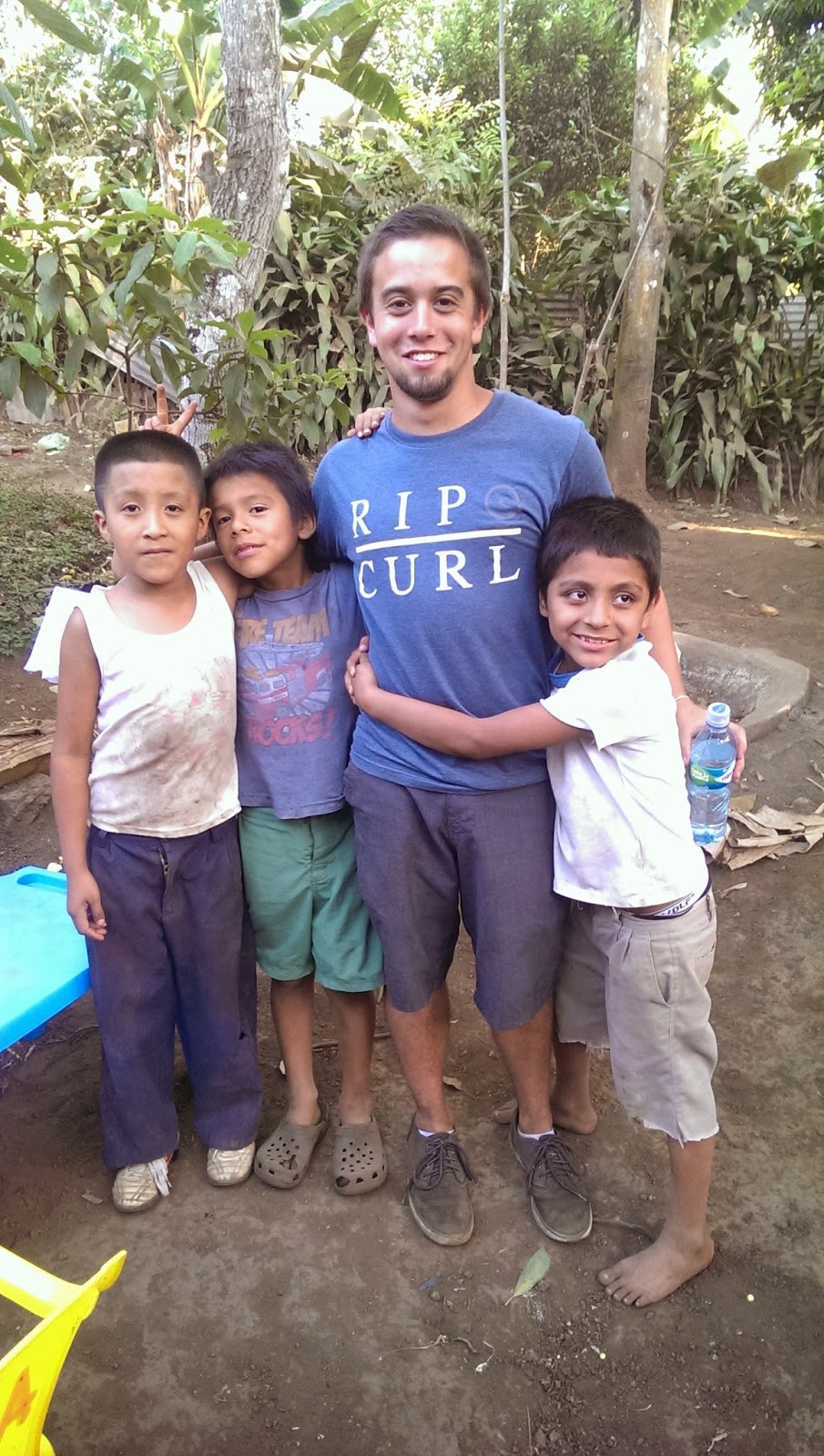
As a traveler in Central America, you have choices. You can buy an all inclusive package, ("todo incluido" as my host mom would say), keep both feet firmly planted between the grounds of your cushy resort and pathway to the beach, and return home with a sunburn, hangover, and an extra ten pounds around your midsection. Or you can venture outside your comfort zone, immerse yourself in a new culture, meet locals, and return home with a refreshing new perspective and the consolation that you have, (in some way), made a positive impact on the land you visited. As enticing as the former option may have sounded two months ago, I can now honestly say that I would much rather do the latter: be a shaper, instead of a mere observer. This is the true definition of ecotourism, a word that is so overused, its true meaning has become ambiguous. Ecotourism is not a stationary act; its implementation is set within an interdependent world of diversity and differences and their respective social and cultural systems. In Nicaragua, my peers and I were fortunate enough to experience and observe a functioning ecotourism establishment and meet the owner of the project.

Nestled within the tropical lush tropical hills just south of Nicaragua’s capital, Managua, is the small village La Concha, site of the “La Mariposa” sites, both hotel and study center. La Mariposa is an idyllic conglomeration of rustic cabinas and colorful hammocks while the study center is a larger, less structured site that accommodates groups; both are the brainchildren of British native, Paulette Goudges. Upon our arrival, Paulette graciously invited us to her office for a pre-lunch presentation. Vivacious and insightful, Paulette discussed her rather novel approach to sustainable development in rural community, a compelling talk only further garnished by her frequent quips of witty British humor.

 Though Paulette is now an appreciated and in many ways, esteemed, member of the community, she has come a long way. Paulette first came to
Nicaragua in the 1980’s during the Contra Wars to volunteer in an orphanage. Upon her arrival and witnessing how destitute the rural Nicaraguans were living, her proposed short trip turned into a three year stay. Realizing how important language acquisition was to her immersion in Nicaraguan culture, Paulette learned Spanish and adopted a two
year-old orphan who she brought back with her to the United Kingdom upon her
departure from Nicaragua. However, reintegrating herself back into Western culture was not easy. The time that Paulette had spent in Nicaragua left
a lasting impression on her, would later send her on a meandering path that would cross continents and oceans. The years that she had spent in Nicaragua had left her enamored with a culture and people that
were more resourceful, persevering and genuine than those she knew in her
homeland.
Though Paulette is now an appreciated and in many ways, esteemed, member of the community, she has come a long way. Paulette first came to
Nicaragua in the 1980’s during the Contra Wars to volunteer in an orphanage. Upon her arrival and witnessing how destitute the rural Nicaraguans were living, her proposed short trip turned into a three year stay. Realizing how important language acquisition was to her immersion in Nicaraguan culture, Paulette learned Spanish and adopted a two
year-old orphan who she brought back with her to the United Kingdom upon her
departure from Nicaragua. However, reintegrating herself back into Western culture was not easy. The time that Paulette had spent in Nicaragua left
a lasting impression on her, would later send her on a meandering path that would cross continents and oceans. The years that she had spent in Nicaragua had left her enamored with a culture and people that
were more resourceful, persevering and genuine than those she knew in her
homeland. After making several return trips to Nicaragua, Paulette
finally decided to make an investment in her future and those of local
Nicaraguans. Paulette cashed in her pension and sold her home in the UK and used those funds to finance the development of La Mariposa. This is not a place for tourists seeking the thrill of nightclubs,
bars, and bright lights, but for tourists looking to gain a greater understanding of a different way of life; in this sense the hotel welcomes
visitors of all-ages and backgrounds who want a true cultural and social immersion
experience instead of a superficial packaged tour, with average stay ranging anywhere from one week to a couple of months. Paulette believes in complete transparency and giving the guests an authentic depiction and understanding of Nicaragua, through an impartial crash-course approach to Nicaraguan culture, politics, and history, even when it may not be favorable. Many people that come to a country with such a convoluted history such as Nicaragua have misconceptions, and are quick to write the country off as being "impoverished," or "politically unstable." However, it is important to understand that each country has its own complex social structure and unique history and seeing the hardships, attitudes, and customs firsthand, ("the good, the bad, and the ugly") can inspire the guests to make a difference. Guests have the option of staying with a local Nicaraguan family instead of at the
hotel. Regardless of where the guests are staying, the one standard among all guests is that they must take Spanish classes during the day, and despite nationality, age and occupational differences, during mealtimes, guests are eager to utilize their newly learned Spanish making for a socially vibrant atmosphere among workers and guests. For
recreation, guests have a wide variety of option: hammock weaving, the construction of traditional handicrafts, guided walks, cooking
lessons, horseback rides, hikes, solar-power lessons.
After making several return trips to Nicaragua, Paulette
finally decided to make an investment in her future and those of local
Nicaraguans. Paulette cashed in her pension and sold her home in the UK and used those funds to finance the development of La Mariposa. This is not a place for tourists seeking the thrill of nightclubs,
bars, and bright lights, but for tourists looking to gain a greater understanding of a different way of life; in this sense the hotel welcomes
visitors of all-ages and backgrounds who want a true cultural and social immersion
experience instead of a superficial packaged tour, with average stay ranging anywhere from one week to a couple of months. Paulette believes in complete transparency and giving the guests an authentic depiction and understanding of Nicaragua, through an impartial crash-course approach to Nicaraguan culture, politics, and history, even when it may not be favorable. Many people that come to a country with such a convoluted history such as Nicaragua have misconceptions, and are quick to write the country off as being "impoverished," or "politically unstable." However, it is important to understand that each country has its own complex social structure and unique history and seeing the hardships, attitudes, and customs firsthand, ("the good, the bad, and the ugly") can inspire the guests to make a difference. Guests have the option of staying with a local Nicaraguan family instead of at the
hotel. Regardless of where the guests are staying, the one standard among all guests is that they must take Spanish classes during the day, and despite nationality, age and occupational differences, during mealtimes, guests are eager to utilize their newly learned Spanish making for a socially vibrant atmosphere among workers and guests. For
recreation, guests have a wide variety of option: hammock weaving, the construction of traditional handicrafts, guided walks, cooking
lessons, horseback rides, hikes, solar-power lessons. Both candid and personable, Paulette firmly believes that in order to positively influence those around you, you must lead by example. As she says, “You cannot just tell other people to act in eco-friendly ways. You must set an example.” Both the hotel and the study center strive to be carbon-neutral. The study center is made entirely from thatch, volcanic rock, and used tires. Hot water is derived from solar panels, and a large percentage of the fruits and vegetables served are grown and picked from the on-site organic garden. Gray water, derived from showers, is stored and used to water the plants. There is a wormery and compost on-site used to enrich the soil. In addition, the habitation of rescue animals on site allows guests have the pleasure of getting a glimpse into some of the amazing wildlife that Nicaragua has to offer, including: monkeys, a toucan, rabbits, and reptiles.
From my interactions with those in the Managua area, I quickly learned that La Mariposa is a famous
 attraction in the area. On site at La Mariposa, eating lunch outside with a friendly mix of people trying to communicate in Spanish, swinging in a hammock, it is easy to forget you are at a hotel. However, since the establishment of La Mariposa, Paulette's aim has been to aid the community in transcending its poverty. Without a doubt, Paulette has succeeded. The hotel, which currently employs over sixty-five people, is the biggest non-public employer in the area and Paulette prides herself on the fact that employees of La Mariposa make more than local wage levels. Paulette believes that in creating sustainable community in rural community it is important to create dignified employment instead of donating money to the local government, where those funds, (if given to the community at all), would be done so in the form of handouts. Local employment is only one of the ways that Paulette promotes sustainable ecotourism development. What impressed me most about La Mariposa, was Paulette’s ability to integrate social and community projects within her larger business framework. Paulette keeps none of the profits from the hotel to herself. Proceeds derived from guests are fed directly back into the community, through employing local people, funding existing local community service projects establishing new programs. The frequency to which Paulette is able to help directly relies on the success of the hotel. In this sense, hotel management and hospitality is the foundation of all else. The busier the hotel is, the more money Paulette will have to give current workers more hours, employ more workers, and to fund current and future projects.

 Paulette believes that the biggest reason that most foreign aid projects fail is that they are derived from a Western blueprint. So many times, Central America's Northern neighbors think they know what the local people want and need, disregard their input and undervalue their knowledge. Paulette believes that it is important to not trivialize the knowledge of the local people and marginalize their needs and wants She
said that in her experience funding community projects, those that lasted were
the ones that people have asked for. Paulette believes that it is important to
communicate with those in the areas that you are trying to help and really
listen. Listen to the needs and concerns.
Paulette believes that the biggest reason that most foreign aid projects fail is that they are derived from a Western blueprint. So many times, Central America's Northern neighbors think they know what the local people want and need, disregard their input and undervalue their knowledge. Paulette believes that it is important to not trivialize the knowledge of the local people and marginalize their needs and wants She
said that in her experience funding community projects, those that lasted were
the ones that people have asked for. Paulette believes that it is important to
communicate with those in the areas that you are trying to help and really
listen. Listen to the needs and concerns.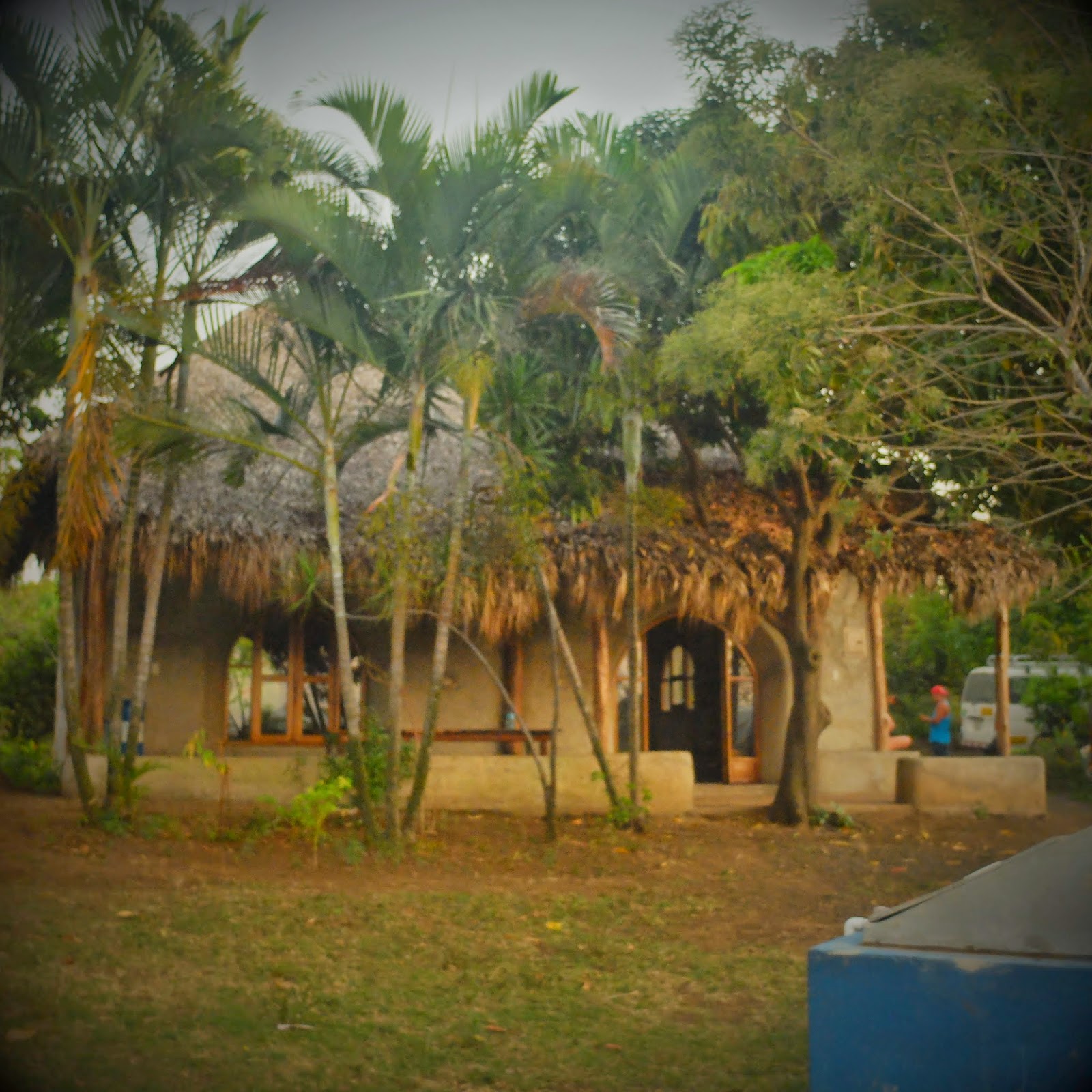

People from the community feel comfortable approaching the establishment and asking for funding. During lunch, we ate delicious glazed donuts that were the courtesy of local women who received money from La Mariposa some time ago to establish a building where they could put their cooking equipment and bake.
During my stay, I got to see and partake in one of their community projects. I visited Ruben Dario Primary School, which serves more than two hundred students from La Concha's barrios. La Mariposa and its guests have contributed funds to complete the construction of the library and have filled the shelves with books and the open space with chairs and tables. I was able to look at the Rincon de Leer (Reading Corner), where I was pleasantly surprised to see how well the children were able to read.
The establishment of the La Mariposa hotel and study center have been an incredible blessing to the La Concha people. Paulette hopes that in her older years she will be able to see Nicaraguan people completely running La Mariposa. The passing over of her creation to the Nicaraguan people would be a gift of dual satisfaction. Paulette would be giving something back to the Nicaraguan people that have accepted her, embraced her vision, and given so much joy to her life; in the same token, having Nicaraguan people run a successful establishment would set a precedent for the future Nicaraguan entrepreneurship.
The time that I spent at La Mariposa was one of the most impactful during my participation in the program. My first few weeks in Costa Rica, hearing English was music to my ears and I would get practically giddy knowing that there were fellow Americans in my midst. However, towards the end of the program, I stopped trying to seek out fellow Americans. After all, if I wanted to only interact with English-speakers I may as well have stayed in the States. If I really wanted to make the most of my experience, I needed to put myself out of the boundaries of my contentment. Hearing Paulette's story and talking to her some of her interns, (who origins stem from around the world), showed me the importance of taking healthy risks, risks that allow you to grow, and gain experience as well as the perspective that comes with it. Instead of traveling to "help," it is more impactful to travel to "learn." Seeing the magnitude of need in Nicaragua made me realize that individual choices and hands are not enough to solve these economic, environmental, and social problems, and that the catalyst for real change is tied within a much larger political framework. We are only small part of a much larger system. And while the Earth may be incredibly vast, we are forever tied to every piece of land we have ever walked upon. Gaining a better understanding of how different people live and why they are in the situations broaden one's perspective and inspire one to support different projects and social causes. Finally, I realized the importance that human connection plays within the larger discourse of sustainability. While we may travel due to curiosity, or a desire to see and experience new things, it is the few moments that we share with people (whether a transient smile, brief conversation, or deeper relationship) that capture our hearts, change our perspectives, and makes us want to stay. The few days that I spent in Nicaragua, living with less and giving back more, were some of the most meaningful moments of my life and those memories will be forever embedded within my heart and mind.
AUTHOR: Heather Haj